


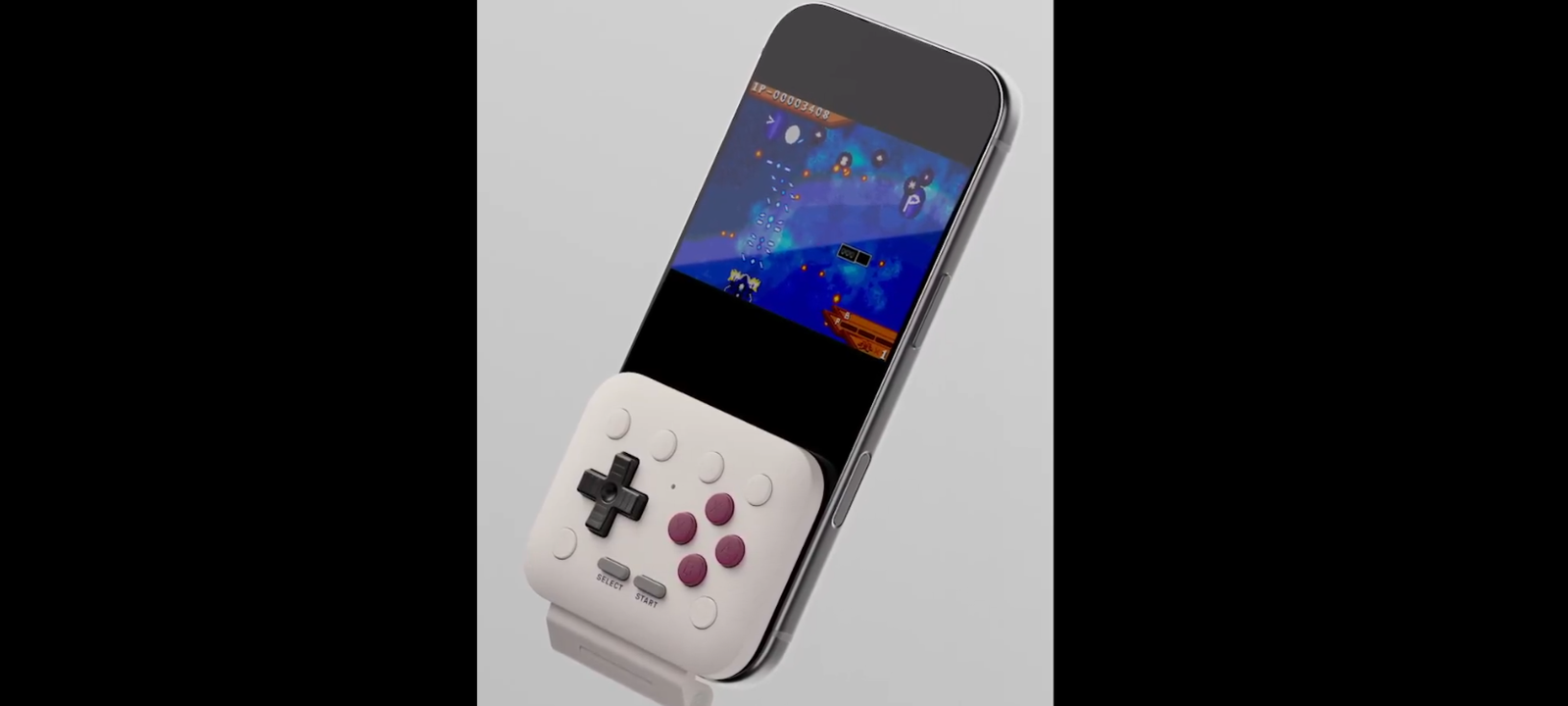
8BitDo has used CES to tease its next mobile gaming controller, and while the company is still keeping full details under wraps, the brief reveal already taps into a growing trend: the renewed importance of physical controls for gaming on phones.
The teaser, shared via 8BitDo’s social channels, shows a compact, flip-style controller designed specifically for smartphones, with a form factor that immediately evokes classic handheld gaming with a Game Boy, rather than modern console pads. It’s a direction that feels very on-brand for 8BitDo, but also one that reflects how mobile gaming habits have evolved over the past few years.
Touchscreens were never the answer for mobile gaming
Smartphones have long been powerful enough to run console-quality games, but control has always been the sticking point. Touchscreens work well for certain genres, but they remain a poor substitute for a proper d-pad and buttons when it comes to precision, timing, or fast reactions.
I was an early adopter for mobile gaming, all the way back to the days of resistive touchscreens and styli. In fact, in some ways, the control options were better then, because many phones relied on physical buttons. Once the buttonless capacitive touchscreen phones came along, mobile gaming suffered. Modern mobile games often feel compromised without tactile controls, especially when they’re ports of existing console or PC releases.
These days, and for retro games in particular, the limitations are obvious. Emulated console and arcade titles demand accurate directional input, clean diagonals, and physical feedback — all things that virtual buttons struggle to deliver, but which 8BitDo has considerable experience with, not least via its FGC controller.
8BitDo’s approach feels deliberately retro
What makes 8BitDo’s teased controller interesting is its apparent rejection of the “mini console pad” approach. Many mobile controllers aim to recreate a full modern gamepad experience, complete with dual analogue sticks and shoulder buttons, all clamped awkwardly around a phone.
By contrast, this new design appears to focus on simplicity: a traditional d-pad, face buttons, and a layout that wouldn’t look out of place on a Game Boy or Neo Geo Pocket. It’s a reminder that not every mobile game needs twin sticks and triggers — and that for a large chunk of mobile and retro gaming, less really is more.
This also ties neatly into the resurgence of portrait-mode gaming, where rotating a phone into landscape just to attach a bulky controller feels like overkill. A compact, phone-first controller makes mobile gaming feel intentional, rather than improvised.
Why physical controllers still matter in 2026
Mobile gaming has shifted significantly, with subscription services, cloud gaming, and emulation all playing a bigger role than ever.
Physical controllers turn phones into credible handheld consoles — not just technically, but psychologically. The moment you add buttons, gaming on a phone stops feeling like a distraction and starts feeling like a proper session.
There’s also an accessibility angle. Physical buttons provide consistent feedback and positioning, which can make games easier to play for longer periods and more comfortable for players who struggle with touchscreen controls.
A crowded space, but one with room to grow
8BitDo isn’t the only manufacturer building controllers for mobiles (the Abxylute M4 has attracted a lot of attention), but it does have a strong reputation for build quality and thoughtful design. Most importantly, its controllers are often favoured by retro fans precisely because they prioritise d-pad quality and input accuracy over gimmicks.
If this new controller delivers on those strengths, it could find a solid audience among players who use their phones as retro machines, portable RPG platforms, or quick arcade fix devices — rather than as substitutes for modern consoles.
Full specifications, pricing and release details are still to come, but even this early tease underlines an important point: as powerful as phones have become, gaming still works best when you can actually feel the controls.
Affiliate Disclosure: Some of the links in this post may be affiliate links, which means I may earn a small commission if you make a purchase through those links. This comes at no extra cost to you. Thank you for your support!

Christian Cawley is the founder and editor of GamingRetro.co.uk, a website dedicated to classic and retro gaming. With over 20 years of experience writing for technology and gaming publications, he brings considerable expertise and a lifelong passion for interactive entertainment, particularly games from the 8-bit and 16-bit eras.
Christian has written for leading outlets including TechRadar, Computer Weekly, Linux Format, and MakeUseOf, where he also served as Deputy Editor.
When he’s not exploring vintage consoles or retro PCs, Christian enjoys building with LEGO, playing cigar box guitar, and experimenting in the kitchen.