


Warning: Trying to access array offset on false in /home/u447225140/domains/gamingretro.co.uk/public_html/wp-content/plugins/patreon-connect/classes/patreon_frontend.php on line 1166
Warning: foreach() argument must be of type array|object, null given in /home/u447225140/domains/gamingretro.co.uk/public_html/wp-content/plugins/patreon-connect/classes/patreon_frontend.php on line 1166
Warning: Undefined variable $tier_title in /home/u447225140/domains/gamingretro.co.uk/public_html/wp-content/plugins/patreon-connect/classes/patreon_frontend.php on line 1256
Exclusive to our Subscriber 64 and Super Mega Subscriber patrons, a series of articles and videos following my exploration of the BBC Micro.
It would be very easy to kick off a series of exclusives based on a system I know well, like the C64 or the Amiga. But as this is a thread of articles for subscribers, I thought it might be interesting to go on a mission to learn something new, and share as I go.
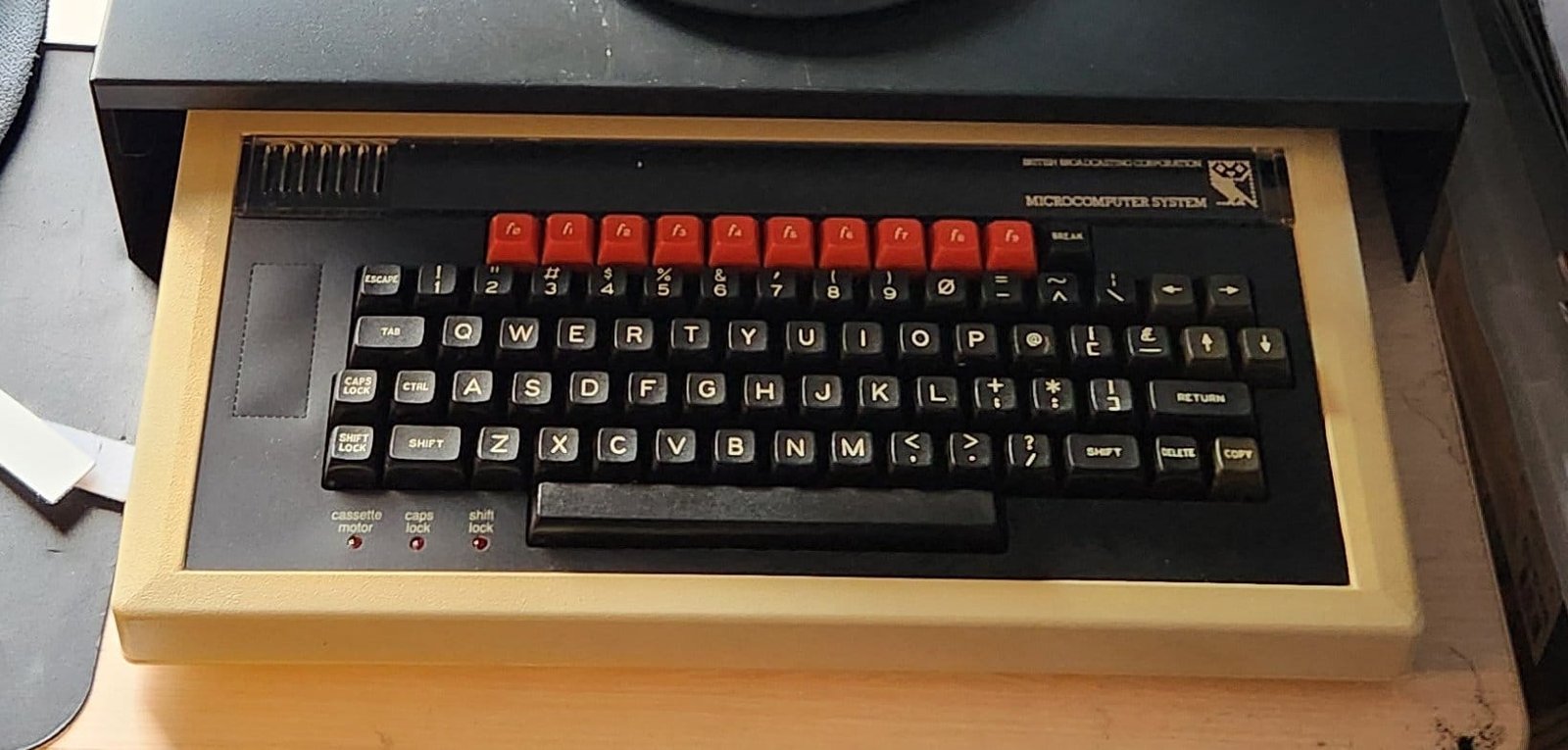
So, rather than a computer I owned, I’m looking at one I nevertheless used regularly — the BBC Micro model B.
Me and the model B
Wheeled into the classroom every Wednesday morning, the BBC Micro landed in our school in 1984, around the same time my parents bought a Commodore 64. Its noisy data transfer from cassette heralded a morning of digital learning — kids taking it in turns to go on the machine while the others coloured in.
The most notable uses were spelling and maths games, although I do recall a fire safety program that appeared to be endorsed by the fire brigade.
Unsurprisingly, the most memorable aspect of the BBC Micro was its text and graphics, which bore a startling similarity to Ceefax, the BBC’s Teletext service.
There was, of course, a reason for that.
My main interaction with this computer back then, however, didn’t occur at school. My aunt and uncle had bought one — I think for their grandchildren — and like we had on the C64, they had an Usbourne book, The Mystery of Silver Mountain.
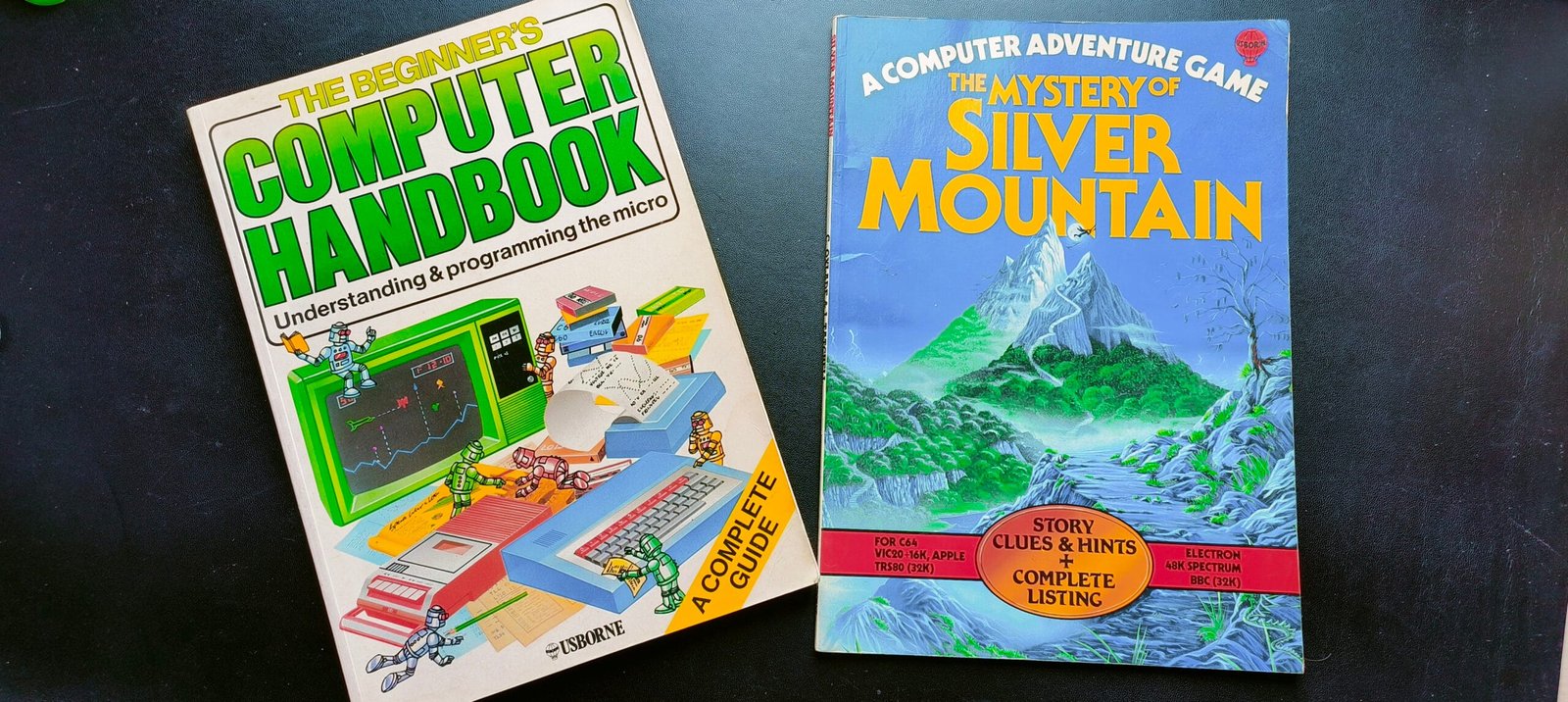
This was a type-in programming project — like you used to get with old computer magazines — and featured a Hobbit-like text adventure. It had quite a limited vocabulary compared with later games.
So, we spent time working on the game one school holiday at my aunt’s house. I’m not sure how far through the game we got there, although it was further than our own attempt on the C64, which was riddled with my dad’s typing errors!
I don’t know when I last used a BBC Micro, but it was probably at senior school. I spent a few months trying to catch a bargain on eBay, but fell short on each occasion.
But then…
How I found my BBC Micro
Some months ago I was asked to contribute to a couple of issues of ComputerActive magazine. As a long-held ambition, I said yes, and in the course of writing one of the columns referred to my search for a BBC Micro model B.
In short, it had been a fruitless search for a device that wasn’t already souped-up and overpriced. I wanted to find my own, revisit days past with the machine, and learn to use it properly this time around.
Lady Luck sang. A few weeks later, I heard from the magazine editor, who told me one of the reader’s had been in touch to offer me an old, barely used model B, gratis.
All I had to do was say yes (and pay for the postage, which was not a problem).
When the computer arrived, I gave it a visual check and carefully plugged it in to see how it did. There was a slight burning smell from the PSU, which I put down to a lack of use. Since the initial test, I’ve booted it up a few times, and the smell has gone.
Now, it is installed in my office, set for a new adventure.
What you can expect in this series
I’m planning more articles, some videos, and hopefully bringing in a few BBC Micro users and experts to explore this computer.
I believe it is an underappreciated system, one that definitely requires reevaluating. We talk about 8-bit systems in the UK with a focus on the Commodore 64 or the British ZX Spectrum — invariably, we forget about this, the other Great British computer from the 1980s.
Affiliate Disclosure: Some of the links in this post may be affiliate links, which means I may earn a small commission if you make a purchase through those links. This comes at no extra cost to you. Thank you for your support!

Christian Cawley is the founder and editor of GamingRetro.co.uk, a website dedicated to classic and retro gaming. With over 20 years of experience writing for technology and gaming publications, he brings considerable expertise and a lifelong passion for interactive entertainment, particularly games from the 8-bit and 16-bit eras.
Christian has written for leading outlets including TechRadar, Computer Weekly, Linux Format, and MakeUseOf, where he also served as Deputy Editor.
When he’s not exploring vintage consoles or retro PCs, Christian enjoys building with LEGO, playing cigar box guitar, and experimenting in the kitchen.