


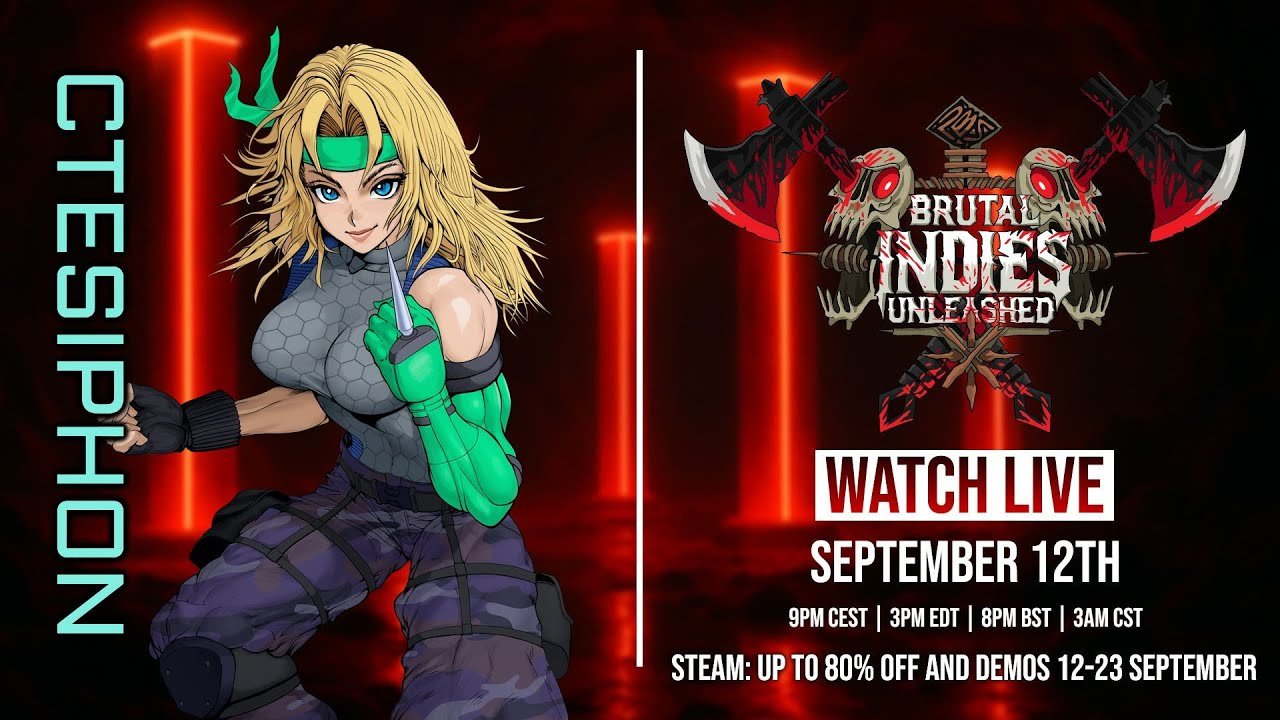
I don’t wishlist shooters lightly these days, but Ctesiphon went straight on the list.
At a glance it looks like a straightforward sci-fi FPS, but dig a little deeper and it becomes clear this isn’t chasing modern trends. You play as Ethelyn Dax, a bounty hunter whose long-overdue resort holiday is interrupted when the Black Death mercenary company occupies the planet’s capital city. They’ve brought overwhelming force and expect no resistance. They are wrong.
The setup is simple, but it works, and it exists mainly to support what the game actually cares about: movement, space, and player choice. Yes, you might call it a boomer shooter, but is that really a bad thing?
Levels that let you move, flank, and poke around
Ctesiphon’s seven main levels are non-linear, with keys, secrets, and multiple routes through each area. You’re encouraged to move, circle enemies, and approach fights from different angles rather than clearing rooms in a straight line.
Ethelyn is quick on her feet, and the game leans into that. Enemies make up for their lack of agility by throwing numbers, drones, and mechs at you, which keeps encounters hectic without turning them into attrition.
The weapons are straightforward and functional: a submachine gun, homing mini-rockets, heavier anti-armour tools, and a Data-Spike for close encounters. Nothing feels gimmicky, and everything exists to solve a specific problem.
Built slowly, by one person, on Linux
One of the more interesting aspects of Ctesiphon is how it’s been made. Development has stretched across nearly a decade, handled by a single developer working primarily on Linux using C/C++, OpenGL, and Quake-era mapping tools.
The custom engine is designed to cope with chaos: lots of enemies, persistent bullet marks, debris, and explosions, all while running comfortably on low-spec systems. It feels built to be stressed, not carefully managed.
Steam Deck support, with an asterisk
Ctesiphon is Steam Deck Verified, but it’s worth noting that the recommended way to play on Deck is via the Windows build through Proton. The native Linux version doesn’t currently support Steam’s own controllers properly due to missing Steamworks integration.
I’ve confirmed this and… yeah. It’s bloody irritating. It also doesn’t support the Google Stadia controllers, either.
The developer has been open about this and intends to address it later, but for now, the safe option is to stick to handheld mode on Steam Deck.
Why I’m paying attention
Ctesiphon isn’t trying to modernise anything or reinvent the shooter. It feels like someone quietly building the sort of FPS they want to play, without worrying about how fashionable that is.
Those don’t come along very often these days — which is exactly why this one stood out. You can pick Ctesiphon up on Steam now.
Affiliate Disclosure: Some of the links in this post may be affiliate links, which means I may earn a small commission if you make a purchase through those links. This comes at no extra cost to you. Thank you for your support!

Christian Cawley is the founder and editor of GamingRetro.co.uk, a website dedicated to classic and retro gaming. With over 20 years of experience writing for technology and gaming publications, he brings considerable expertise and a lifelong passion for interactive entertainment, particularly games from the 8-bit and 16-bit eras.
Christian has written for leading outlets including TechRadar, Computer Weekly, Linux Format, and MakeUseOf, where he also served as Deputy Editor.
When he’s not exploring vintage consoles or retro PCs, Christian enjoys building with LEGO, playing cigar box guitar, and experimenting in the kitchen.