


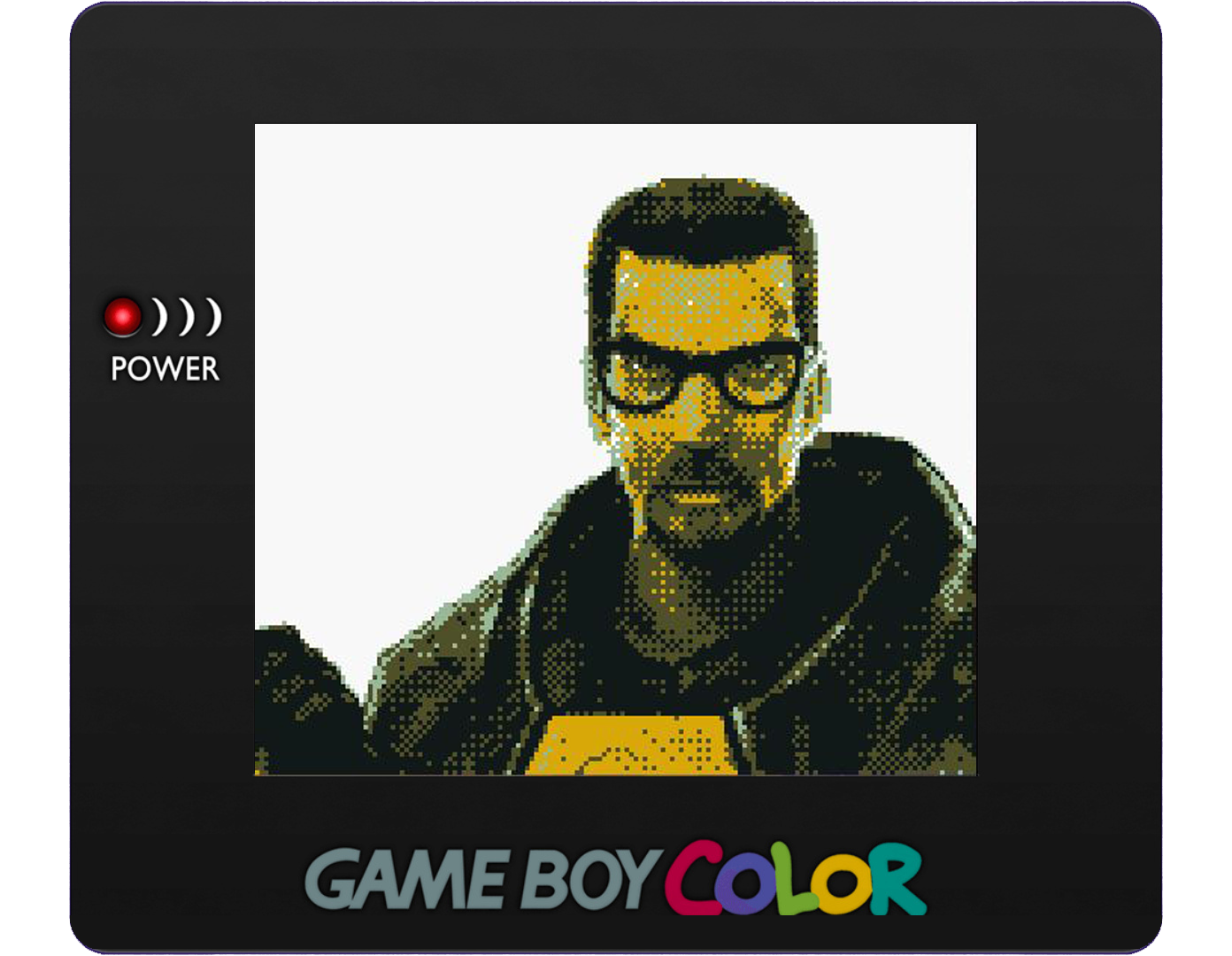
Fan-made demakes continue to be one of the most fascinating corners of retro gaming culture, and Half-Life: Gamma Burst is a particularly inspired example. Available now as a playable teaser on itch.io, the project reimagines Valve’s genre-defining shooter as if it had somehow arrived on the Game Boy Color.
Developed by RoloMaisso, Half-Life: Gamma Burst is not a full recreation of the original game, but a focused slice centred on the Hazard Course, translated into a top-down, 8-bit action format. It’s a small project in scope, but a big one in terms of ambition — and a reminder of just how adaptable Half-Life’s core ideas really are.
A late discovery, and a lasting impression
I came to Half-Life relatively late. I first heard about it in the late ’90s from an ex-girlfriend and, for reasons that now escape me, immediately dismissed it. It wasn’t until the early 2000s that I put down DOOM and finally sat down with Half-Life properly — and realised just how badly I’d misjudged things.
What struck me then, and still does now, is how strong the original game’s foundations are. Half-Life isn’t just remembered for its storytelling or atmosphere; it’s the combination of problem-solving, combat design, and pacing that really makes it endure. Strip away the tech, and the game still works — which is exactly why projects like Gamma Burst make sense in the first place.
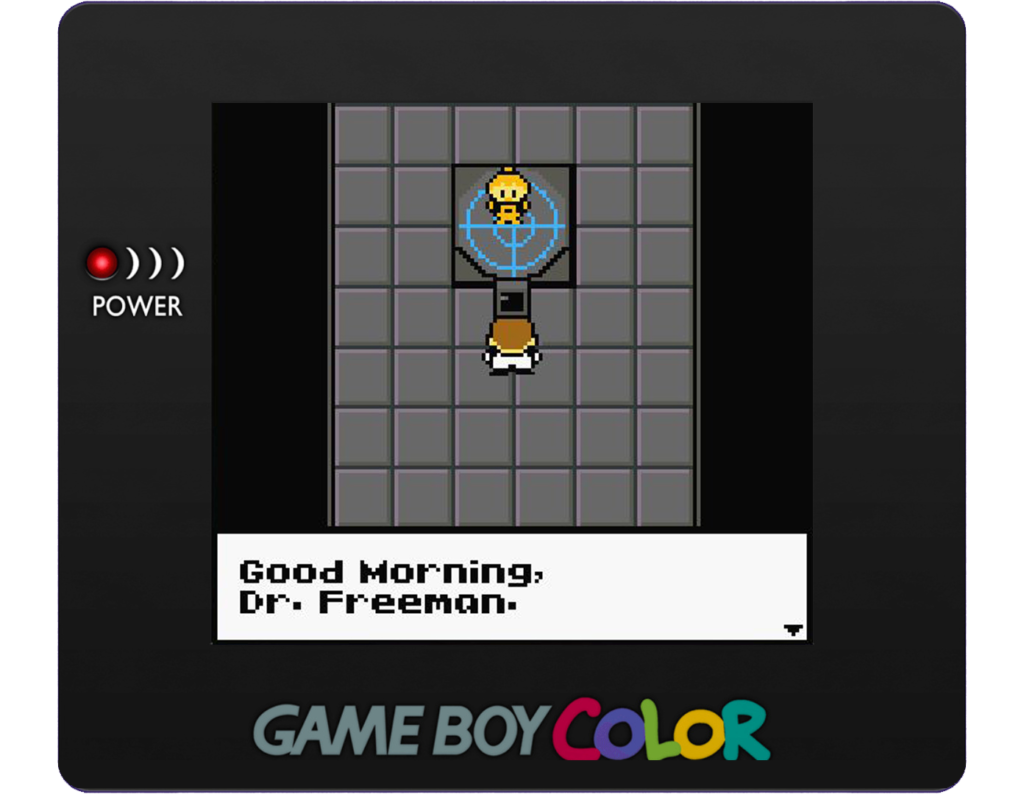
Half-Life, reimagined in 8-bit
Rather than attempting an impossible first-person conversion, Gamma Burst smartly reframes Half-Life as a top-down action game, using chunky sprites, limited colours and simplified environments that feel authentic to Game Boy Color hardware. The result isn’t a novelty ROM, but something that genuinely feels like it belongs on a handheld from the late ’90s.
The Hazard Course works particularly well in this format, acting as both a tutorial and a proof of concept. Movement, interaction and enemy encounters have all been adapted to suit short play sessions and portable hardware constraints, while still retaining the unmistakable flavour of Black Mesa.
The demo is playable via emulator or real hardware using a flash cart, which only adds to its charm.
Echoes of Codename: Gordon
Seeing Half-Life: Gamma Burst in action also brought back memories of Codename: Gordon, the excellent side-scrolling Half-Life spin-off released back in 2004. That game — now frustratingly hard to find — took a similar approach, translating Half-Life and Half-Life 2 into a 2D format without losing their identity.
Both projects highlight the same truth: Half-Life works because its mechanics and world design are robust enough to survive radical reinterpretation. Whether it’s a freeware PC platformer or a Game Boy-style demake, the series’ DNA remains recognisable.
Check out Half-Life: Gamma Burst
Like many of the best demakes, Gamma Burst isn’t about replacing the original or competing with it. It’s about exploring what might have been, and celebrating the creative limits of older hardware. In doing so, it also reinforces why Half-Life remains one of the strongest franchises in gaming history — not because of its technology, but because of its ideas.
The full game is still in development, but even in its current form, Half-Life: Gamma Burst is well worth a look (grab it on itch.io). For retro fans, it’s a clever homage; for Half-Life fans, it’s a reminder that the original game’s brilliance still shines, no matter how many bits you strip away.
Affiliate Disclosure: Some of the links in this post may be affiliate links, which means I may earn a small commission if you make a purchase through those links. This comes at no extra cost to you. Thank you for your support!

Christian Cawley is the founder and editor of GamingRetro.co.uk, a website dedicated to classic and retro gaming. With over 20 years of experience writing for technology and gaming publications, he brings considerable expertise and a lifelong passion for interactive entertainment, particularly games from the 8-bit and 16-bit eras.
Christian has written for leading outlets including TechRadar, Computer Weekly, Linux Format, and MakeUseOf, where he also served as Deputy Editor.
When he’s not exploring vintage consoles or retro PCs, Christian enjoys building with LEGO, playing cigar box guitar, and experimenting in the kitchen.