


It is easy to think of Half-Life 2 as a static masterpiece—a fixed point in gaming history that arrived in 2004 and stayed there. But if you’ve been playing it on Steam recently, you aren’t playing the game that shipped two decades ago.
As highlighted in this fascinating deep-dive video, Gordon Freeman’s journey to City 17 has been tweaked, broken, and rebuilt more times than an airboat.
The dawn of the “downloader app”
I first picked up the game on the recommendation of a colleague. At the time, he’d spent hours staring at a progress bar as the game trickled down via Steam. In 2004, the notion of paying for a triple-A title through a “downloader app” was revolutionary—and, for many, a bit much to resist.
I’ll admit the initial server struggles put me off for a moment. But once the launch-week chaos settled and the servers could actually cope with the demand, I jumped in. I was absolutely hooked. Over the years, I’ve returned to Half-Life 2 and its sequels repeatedly, clocking in 98.8 hours (and that’s just since Steam started tracking stats).

One thing always struck me: the game seems to look good whenever I play it. It never felt like a relic. Thanks to some technical detective work, we finally know why.
A tale of three PCs: From retail to anniversary
The original 2004 experience was a time capsule of early Source Engine ambitions. While it handled high resolutions surprisingly well, it was a bit of a “Wild West” of rendering:
- The “Classic” Quirks: The original PC retail build (v2187) had a flashlight that lacked dynamic shadows and only worked at specific angles. Blood splats were smaller, and many materials had a weird, oily shine that didn’t always make sense.
- The Stabilization: Following the release of The Orange Box, Valve began backporting improvements from the Episodes. This fixed the flashlight, added HDR (High Dynamic Range) lighting, and updated Alyx Vance to her higher-detail model.
- The 20th Anniversary Polish: The version we play today is the most refined yet. It fixes decade-old bugs—like the APC wheels that used to clip through the floor in the plaza—and restores the transparency of fence shadows that had been opaque for years.
The console compromises: Xbox, PS3, and 360
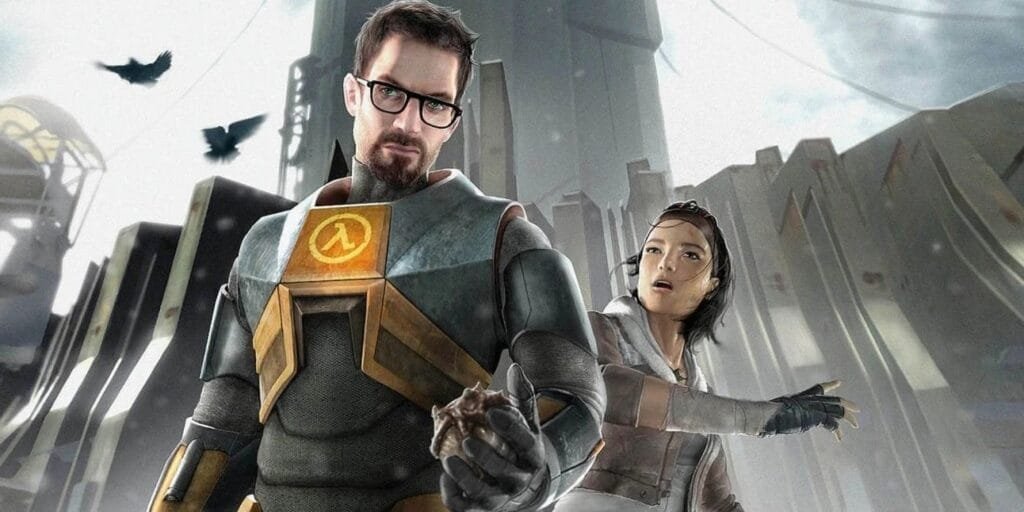
The video also sheds light on the “technical miracles” required to get this game onto consoles. Bringing Half-Life 2 to the original Xbox in 2005 required some brutal surgery:
- Geometry Cuts: Massive chunks of level geometry were simplified to fit into the Xbox’s 64MB of RAM.
- Loading Zones: Seamless PC areas were broken up by frequent loading screens.
- Low Fidelity: Textures were drastically reduced, and draw distances were tiny.
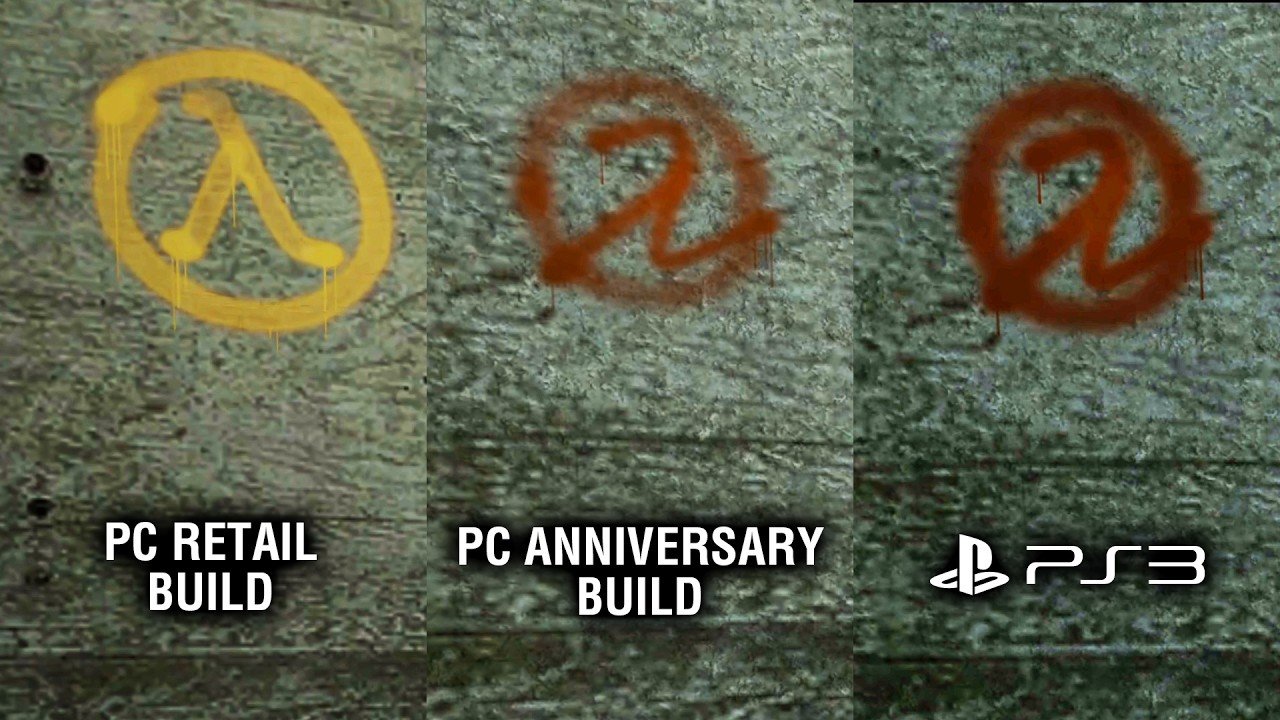
Interestingly, the PlayStation 3 and Xbox 360 versions (via The Orange Box) introduced a unique “glow” effect on item pickups—including the HEV suit—that isn’t present in the standard PC builds.
Remember those?
Comparison of major versions
| Feature | 2004 Retail PC | Original Xbox | 20th Anniversary (PC) |
| Flashlight | No dynamic shadows | No dynamic shadows | Dynamic shadows fixed |
| Water | Transparent/Blue tint | Simple cube map (opaque) | Refined reflections |
| Models | Original 2004 assets | Highly simplified | Episode-quality assets |
| Lighting | Static LDR | Static LDR | Full HDR & Ray-traced (RTX Demo) |
| Cheat Codes | Console commands | Button combos (Konami code) | Console commands |
The weirdest timeline: Half-Life 2 Survivor
Of all the variants examined in the video, the most bizarre is undoubtedly Half-Life 2: Survivor, a Japan-exclusive arcade version. It stripped away the “walking” and story-heavy sections (starting the game at Route Canal) and added an arcade HUD, third-person cutscenes, and even team-based multiplayer classes. It’s Half-Life 2 reimagined as a high-octane coin-op.
But what about Half-Life 3?

While the 20th Anniversary update is the current gold standard, the Half-Life 2 RTX demo shows where we’re headed. With path-traced lighting and physically based materials, the game looks modern without losing the original art direction.
If Half-Life 3 is really happening, it has a strong foundation that has been repeatedly reinforced with the latest graphical enhancements.
It’s been a long 20 years for Gordon Freeman. He’s been compressed for the Xbox, turned into an arcade hero in Japan, and polished to a mirror sheen on Steam. It turns out my 98.5 hours weren’t just spent playing a classic—I was playing an evolving piece of digital history.
Affiliate Disclosure: Some of the links in this post may be affiliate links, which means I may earn a small commission if you make a purchase through those links. This comes at no extra cost to you. Thank you for your support!

Christian Cawley is the founder and editor of GamingRetro.co.uk, a website dedicated to classic and retro gaming. With over 20 years of experience writing for technology and gaming publications, he brings considerable expertise and a lifelong passion for interactive entertainment, particularly games from the 8-bit and 16-bit eras.
Christian has written for leading outlets including TechRadar, Computer Weekly, Linux Format, and MakeUseOf, where he also served as Deputy Editor.
When he’s not exploring vintage consoles or retro PCs, Christian enjoys building with LEGO, playing cigar box guitar, and experimenting in the kitchen.