



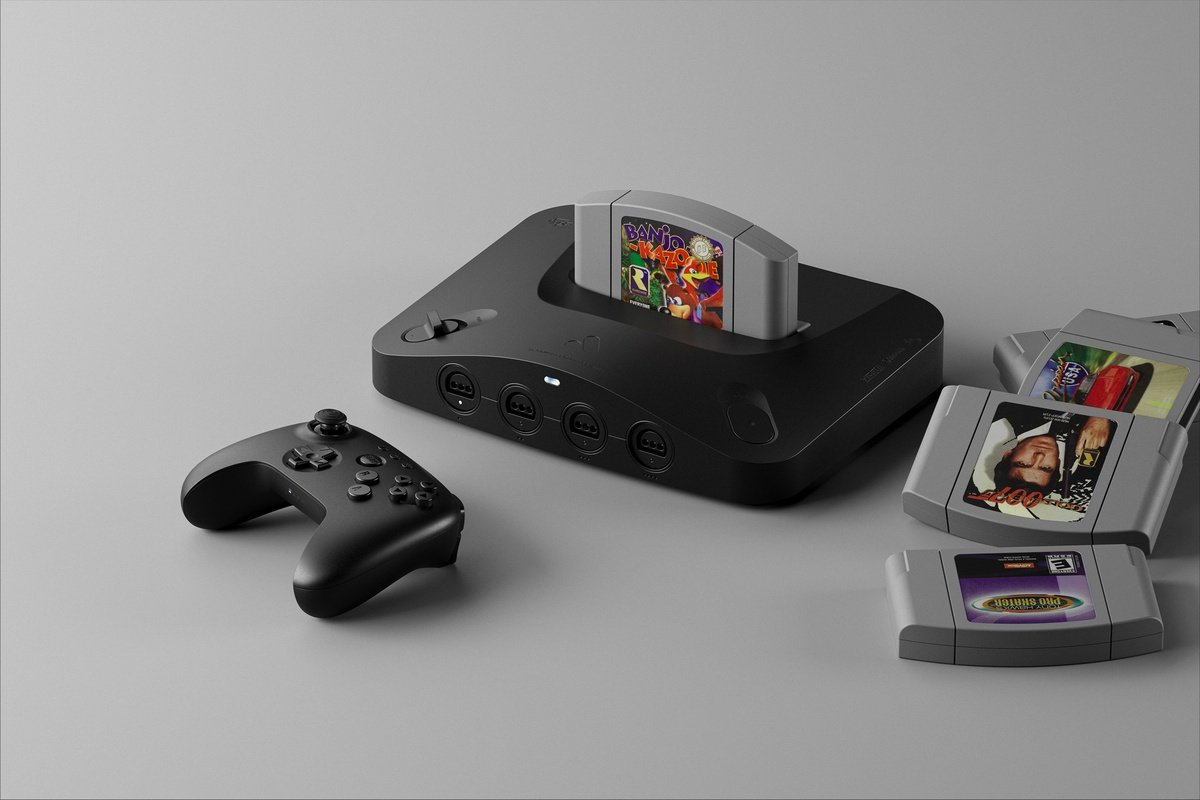
A new technical analysis of the recently released Analogue 3D has raised questions about some of the system’s marketing claims, with early testing suggesting differences in timing and compatibility compared to original Nintendo 64 hardware.
The discussion comes at a time when a big-hitting alternative, the ModRetro M64, is also gaining attention in the retro hardware community.
The video analysis argues that while the long-delayed Analogue 3D is a capable device, several common marketing assertions — including cycle accuracy and “hardware-level” reproduction without emulation — may not fully match up with real-world behaviour. At the same time, the creator of the analysis also expressed optimism that future firmware updates could improve accuracy.
If you’re interested in how the ModRetro M64 and how it compares to the Analogue 3D, we’ve previously covered both topics in depth:
- ModRetro’s M64 might be the most authentic N64-style console yet
- What is the ModRetro M64 and is it a better N64 option than the Analogue 3D?
FPGA vs emulator — semantics and expectations
One of the key points raised in the video (by YouTuber Kaze Emanuar) concerns how FPGA hardware is described in marketing.
Analogue’s materials emphasise that the 3D uses FPGA rather than software emulation to recreate the N64, and suggest this yields superior authenticity. Emanuar correctly notes that FPGA is still a form of emulation, albeit implemented in hardware rather than software, and that accuracy can vary depending on how faithfully electrical behaviour and timing are reproduced.
This distinction matters when specific claims about timing or compatibility are made — especially in forums where precision fidelity is a priority.
Cartridge and peripheral compatibility
Analogue’s promotional material highlights near-complete compatibility with original cartridges and accessories. In the analysis, most peripherals appear to function correctly, but at least one cartridge type failed to boot. This suggests that while the hardware handles a wide range of original media well, there may still be edge cases where compatibility isn’t perfect.
Timing, cycle accuracy and performance
The most detailed section of the video involves performance profiling in homebrew and retail titles. Using a built-in profiler in one game, the tester compared the Analogue 3D’s timing to that of an original Nintendo 64. The results suggested:
- The CPU core in the Analogue 3D measured slightly slower than expected (around 6% difference in one test).
- The RSP (responsible for geometry processing) was notably slower in some scenarios (around 30% slower in that test), causing reduced frame rates in specific cases.
These differences led the tester to conclude that the Analogue 3D did not meet strict definitions of cycle accuracy. The video notes that even highly accurate software emulators can sometimes perform closer to original hardware in timing tests.
It’s worth emphasising that these findings come from one individual’s tests and that real-world results may vary across games and configurations.

Some other observations from Kaze Emanuar’s video:
Timing, cycle accuracy and performance
- Testing suggests the Analogue 3D is not cycle accurate, with some homebrew showing CPU timings around 6% slower and RSP performance up to 30% behind original N64 hardware, affecting frame rates in edge cases.
Input lag and responsiveness
- While Analogue promotes low latency, some software emulators can achieve lower input lag via immediate framebuffer presentation — an option not currently available on Analogue 3D.
Practical usability
- Compact design, HDMI output, USB controllers, and overclocking options improve everyday play, though slow OS boot times and per-game video setup were noted.
Test suites and edge cases
- Community test ROMs reveal mixed accuracy, passing some timing tests while missing rarely used N64 hardware behaviours not seen in retail games.
The bigger picture
What this discussion highlights is that “cycle accurate” means different things to different people, and that FPGA implementations can vary widely depending on design choices. For players prioritising absolute precision, these nuances are worth understanding before purchase.
It also illustrates why the community has been watching alternatives like the ModRetro M64 closely — an approach some see as promising a higher degree of electrical and timing fidelity through its own FPGA design.
Affiliate Disclosure: Some of the links in this post may be affiliate links, which means I may earn a small commission if you make a purchase through those links. This comes at no extra cost to you. Thank you for your support!

Christian Cawley is the founder and editor of GamingRetro.co.uk, a website dedicated to classic and retro gaming. With over 20 years of experience writing for technology and gaming publications, he brings considerable expertise and a lifelong passion for interactive entertainment, particularly games from the 8-bit and 16-bit eras.
Christian has written for leading outlets including TechRadar, Computer Weekly, Linux Format, and MakeUseOf, where he also served as Deputy Editor.
When he’s not exploring vintage consoles or retro PCs, Christian enjoys building with LEGO, playing cigar box guitar, and experimenting in the kitchen.