


One of the oddities of modern retro hardware is scale. Mini consoles look the part until you plug them into a huge modern TV, at which point the illusion quietly collapses. The Amiga A500 Mini is a good example — charming, capable, and unmistakably Amiga, but always slightly out of place once it’s connected to a 55-inch panel.
One retro enthusiast has decided to fix that.
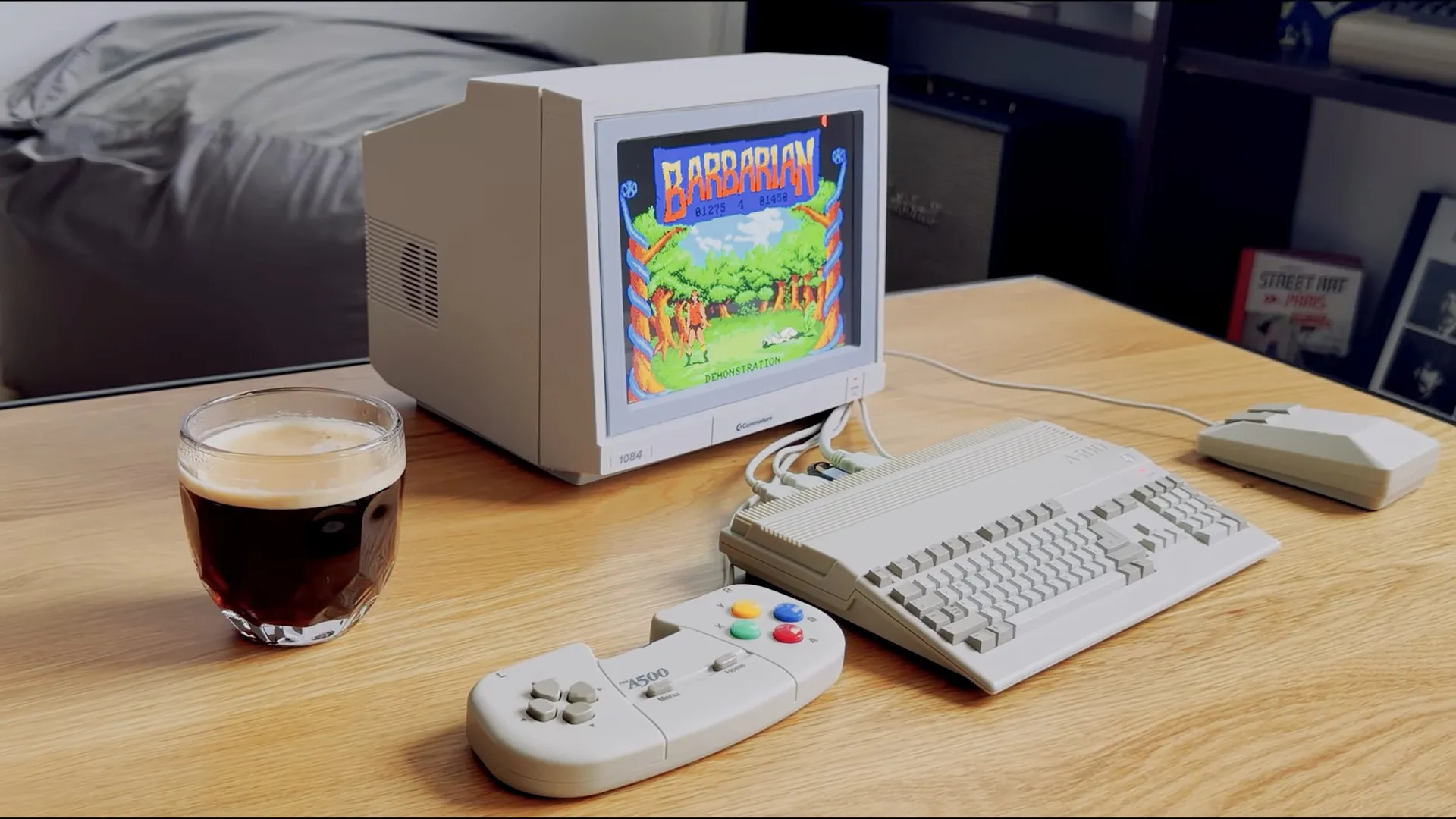
Rather than mod the console itself, they’ve created a scale-sized version of Commodore’s classic 1084 monitor, designed specifically to sit alongside the A500 Mini. It’s 3D-printed, carefully proportioned, and — crucially — fully functional.
At a glance, it looks exactly how you remember. Beige plastic, familiar curves, front-mounted controls. The difference is that this one fits neatly on a desk without dominating it, and pairs visually with the A500 Mini in a way that feels oddly “correct”.
Not just a prop
This isn’t a static display piece or a hollow shell. Inside the printed casing is an 8-inch LCD panel with HDMI and analogue inputs, speakers, and modern controls. Hook it up to an A500 Mini (or even a C64 Mini) and you’ve got a complete, self-contained micro Amiga setup that actually makes sense at this scale.
It’s obviously not a CRT, and nobody is pretending it replaces a real 1084. But that’s not really the point. This is about rebalancing the retro universe — making the physical experience of using a mini console feel deliberate rather than compromised.
A familiar shape, even without owning one
I never actually owned a Commodore monitor myself. Like a lot of people, my Amiga setup was a mix of whatever screens were available at the time. That said, I did use an Amiga 4000 paired with a Commodore monitor at college, and the shape, the colour, and the overall presence stuck with me.
That’s probably why this project works so well. Even if you didn’t have one at home, the 1084 became part of the shared visual language of the Amiga — something you saw in shops, classrooms, magazines, and demo setups.
Why this works so well
What makes this project interesting isn’t just the craftsmanship, but the idea behind it. For years, we’ve shrunk the computers and consoles but left everything else oversized. This flips that logic around and asks: what if the peripherals had been miniaturised too?
The builder designed the monitor in CAD and assembled it around readily available components, which makes the whole thing feel achievable rather than purely ornamental. It’s a practical piece of retro-making, not just a showpiece.
Now all we need is a matching mini mouse that feels as good as the original.
Affiliate Disclosure: Some of the links in this post may be affiliate links, which means I may earn a small commission if you make a purchase through those links. This comes at no extra cost to you. Thank you for your support!

Christian Cawley is the founder and editor of GamingRetro.co.uk, a website dedicated to classic and retro gaming. With over 20 years of experience writing for technology and gaming publications, he brings considerable expertise and a lifelong passion for interactive entertainment, particularly games from the 8-bit and 16-bit eras.
Christian has written for leading outlets including TechRadar, Computer Weekly, Linux Format, and MakeUseOf, where he also served as Deputy Editor.
When he’s not exploring vintage consoles or retro PCs, Christian enjoys building with LEGO, playing cigar box guitar, and experimenting in the kitchen.